Showing posts with label History. Show all posts

4.15.2011

April 15th 69AD
Battle at Bedriacum, Northern Italy


The Battle of Bedriacum refers to two battles fought during the year of the Four Emperors near the village of Bedraicum, Now Calvatone, about 35 kilometers (20 miles) from the town of Cremona in northern Italy. The fighing in fact took place between Bedricum and Cremona, and the battles are sometimes called "First Cremona" and "Second Cremona" 

First Cremona
Marcus Salvius Otho, with the support and aid of the Praetorian Guard, had his predecessor Galbamurdered in January and claimed the throne for himself. However, legate Aulus Vitellius, governor of the province of Germania Inferior, had also claimed the throne earlier in the month and marched on Rome with his troops. Vitellius' forces were divided into two armies, one commanded by Aulus Caecina Alienus and the other by Fabius Valens. The Vitellian forces included legions XXI Rapax, VAlaudae and powerful vexillationes from all the other legions stationed on the Rhine, together with a strong force of Batavian auxiliaries, a force of around 70,000 in total. The forces commanded by Caecina crossed the Alps by the Great St. Bernard Pass to reach northern Italy. They attackedPlacentia but were repulsed by the Othonian garrison and fell back on Cremona to await the arrival of Valens' army.
Otho left Rome on the March 14, and marched north to meet the challenge, leaving his brother Titianus in charge of Rome. He made his base at Brixellum. His forces included legions I Adiutrix,XIII Gemina, a forward detachment of XIIII Gemina, the Praetorian Guard and a force of gladiators. His general staff included generals such as Gaius Suetonius Paulinus, who, as governor of Britain, had defeated Boudica eight years before, but Otho decided to call his brother Titianus from Rome to act as his commander in chief.
Before Titianus arrived, one engagement had already been fought. Caecina tried to set up an ambush at a village called Locus Castrorum, about half way between Bedriacum and Cremona on the Via Postumia. However the Othonians were informed of this, and their army marched for Locus Castrorum, led by Suetonius Paulinus. The Othonians had the better of the fighting which followed, and Caecina's troops retreated to Cremona. Here they were joined by Valens' army, which had followed a longer route through Gaul.
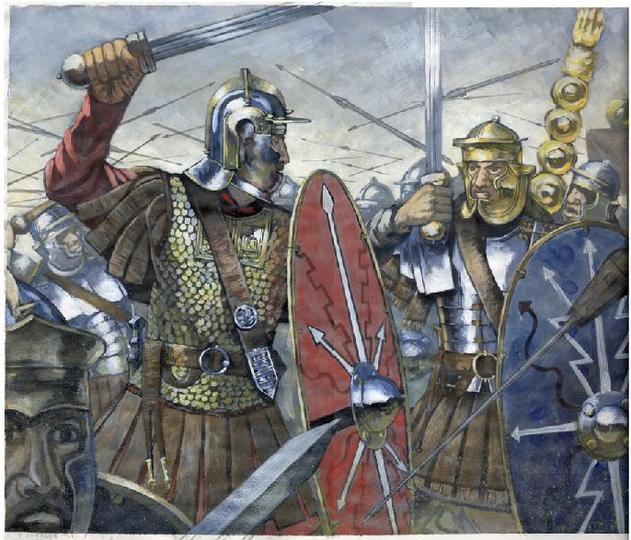
Titanius had now joined the Othonian armies and took command. It was decided to march on Cremona to give battle, against the advice of Paulinus and other generals, who wished to wait until other legions, known to be on the way, had arrived. Otho himself remained at Brixellum to await the outcome. On 14 April the two armies met on the Via Postumia, nearer Cremona than Bedriacum, with the Othonian troops already tired after a long march. Some of the heaviest fighting was where Otho's 1st Adiutrix legion, recently raised from the marines at Ravenna, clashed with Vitellius' veteran Rapax. The Adiutrix acquitted itself well, capturing the eagle of the 21st, though its commanding officer was killed as the 21st strove to recover it. Elsewhere on the battlefield, however, Otho's 13th legion was defeated by Vitellius'Alaudae, and the Adiutrix eventually gave way when a force of Batavian auxiliaries took them in the flank. According to Dio Cassius about 40,000 men were killed in the fighting. The Othonian troops fled back to their camp in Bedriacum, and the next day surrendered to the Vitellian forces and took the oath of allegiance to Vitellius.
When news of the defeat was brought to Brixellum, many of Otho's troops urged him to fight on, pointing out that more troops were on the way. Otho however decided to commit suicide rather than cause more deaths. He had been emperor for less than three months. Vitellius continued his march on Rome, where he made a triumphal entry and was recognized as emperor by the Senate.

Second Cremona 
Meanwhile, the legions stationed in the Middle East provinces of Judaea and Syria had acclaimed Vespasian as emperor. Vespasian had been given a special command in Iudaea by Nero in 67 with the task of putting down the Great Jewish Revolt. He gained the support of the governor of SyriaGaius Licinius Mucianus and a strong force drawn from the Judaean and Syrian legions marched on Rome under the command of Mucianus.
Before the eastern legions could reach Rome, the Danubian legions of the provinces of Raetia and Moesia also acclaimed Vespasian as Emperor in August. Three of these legions, III Gallica, VIII Augusta and VII Claudia had been on their way to support Otho when they heard of his defeat at the first battle of Bedriacum. They had been made to swear allegiance to Vitellius, but when they heard of Vespasian's bid for power they switched their support to him.[clarification needed] They persuaded the other two legions, VII Galbiana and XIII Gemina to join them, which the thirteenth Gemina did all the more readily as they were one of the legions which had been defeated at First Bedriacum, and had been made to build amphitheatres for Valens and Caecina as punishment. Led by the commanding officer of the seventhGalbiana, Marcus Antonius Primus, they marched on Rome, and having a shorter distance to march reached Italy before Mucianus' troops.
When Vitellius heard of Antonius' approach, he dispatched Caecina with a powerful army composed of XXI Rapax, V Alaudae, I Italica and XXII Primigenia together with detachments from seven other legions and a force of auxiliaries. The first of Antonius' legions had arrived at Verona, but though urged to attack them before the remainder of the army arrived, Caecina declined to do so. Caecina had been plotting with Lucilius Bassus, commander of the fleet at Ravenna, to switch their support to Vespasian. His troops refused to follow his lead however, and put him in chains. Valens, who had been delayed by illness, had by now set out from Rome.
Caecina's army, now without their general, advanced on Cremona. Antonius was now based at Bedriacum, and advanced towards Cremona with a force of cavalry. They encountered the vanguard of the Vitellian army between Bedriacum and Cremona on the 24 October and a battle followed, with Antonius sending back to Bedriacum for the legions. Antonius' troops had the better of the fighting, and the Vitellian troops retreated to their camp outside Cremona.
Antonius' forces advanced along the Via Postuma towards Cremona. They were opposed by a powerful Vitellian army, who had been reinforced by other legions including legion IIII Macedonica, but were still without a commander as Valens had not yet arrived. By now night had fallen and the battle continued through the hours of darkness. The seventh Galbiana, Antonius' own legion, suffered heavy casualties and lost its eagle for a while, though one of its centurions later sacrificed his own life to win it back. Eventually Antonius' forces began to gain the upper hand, and the turning point came when dawn broke. Antonius' third Gallica had served in Syria for many years and while there had adopted a local custom. As the sun rose they turned to the east to salute it, and this was misinterpreted by the Vitellian forces who thought that they were greeting reinforcements from the east and lost heart. The Vitellian forces were driven back into their camp, which was taken by Antonius' forces. Antonius then attacked Cremona itself, which surrendered. Cremona was burned by the victorious troops.
Antonius continued to Rome, where Vitellius was taken prisoner and shortly afterwards killed. The way was thus cleared for Vespasian to ascend the throne near the end of this bloody year of crisis.


2.23.2011

February 23 1886
Tchaikovsky's Symphony "Manfred" Premieres


The Manfred Symphony in B minor, Op. 58, is a programmatic symphony composed by Pyotr Ilyich Tchikovsky's symphonies he completed that is not numbered (the symphony in E flat is a conjectural work left unfinished by the composer) and was written between the Fourth and Fifth symphonies.
Like the fantasy-overture Romeo and Juliet, Tchaikovsky wrote Manfred Symphony at the behest of nationalist compoers Mily Balakirev, who provided a program written by critic Vladimir Stasov. Stasov had sent the program to Balakirev in 1868, hoping Balakirev would write a symphony based on it. Balakirev did not feel compatible of carrying put this project and sent the program to french composer Hector Berlioz, Whose programmatic works had genuinely impressed him. Berloiz refused, claiming old age and ill health, and returned the program to Balakirev. Balakirev kept the program until he reestablished contact with Tchaikovsky in the early 1800's.
The Manfred Symphony is the only programmatic symphonic work by Tchaikovsky in more than one movement. he initially considered the work one of his best, and in typical reversal of opinion later considered destroying all but the opening movement. the The symphony was greeted with reviews, some finding much to laud in it , and others feeling that its programmatic aspects only weakened it. Manfred remained rarely preformed for many years, probably due to its length and complexity. It has been recorded with increasing frequency but is still seldom heard in the concert hall

2.22.2011

February 22 1349
Jews are Expelled from Zurich Switzerland


The Jews of Switzerland, being almost exclusively engaged in money-lending, where tolerated because of there wealth and were prosecuted for the same reason. Whenever the Christian inhabitants were heavily indebted to the Jews a pretext was sought to get rid of the latter, and all kinds of crimes were ascribed to them, including ritual murder the poisoning of wells, and the desecration of the host. The first Swiss persecution of the Jews took place at Bern in 1294, when they were accused of having cruelly murdered a boy named Rudolf (Ruff). They were accordingly expelled from the city, although they where soon readmitted. Then cam the plague of the year 1349, when the Black Death raged throughout Switzerland.

2.21.2011

February 21 1431
Trial Against Joan of Arc begins


The trial of Joan of Arc, which took place before an English-backed church in Rouen, France in the first half of the the year 1431, in the minds of many people. one of the most significant and moving trials ever conducted in human history. It culminated in the execution of the person known to history as Joan of Arc, the young French peasant girl who was defendant in the case. The trial verdict would later be reversed on appeal by the Inquisitor-General, thereby completely exonerating her. She is now a French national heroine and Saint of the Roman Catholic Church. 

2.20.2011

February 20 1808 Charles-Auguste de Bériot


Charles Auguste de BĂ©riot (20 February 1802 – 8 April 1870) was a Belgian violinist and composer.


Born in Leuven, where there is now a street named in his honour, he moved to France in 1810, where he studied violin with Jean-Francois Tiby, a pupil of Giovanni Battista Viotti. He was later encouraged by Viotti himself and briefly worked withBaillot but did not embrace all their teachings and was also influenced by Paganini. He served as chamber violinist to KingCharles X of France and to King William I of the Netherlands and toured with great success to London, Paris and the great music centres of Europe. In addition to playing the violin, he was a virtuosic pianist who toured through much of China despite the emperor's objections. 


BĂ©riot lived together with the opera singer Maria Malibran and had a child with her in 1833 (Charles-Wilfrid de BĂ©riot, a piano professor who taught Maurice Ravel, Ricardo Viñes, Enrique Granados and others). They were married in 1836 when Malibran obtained an annulment of her previous marriage. Felix Mendelssohn wrote an aria accompanied by a solo violin especially for the couple. However, Malibran died the same year from injuries sustained in a fall from a horse.


After Malibran's death, de BĂ©riot lived in Brussels, playing little in public. In 1841, however, he went on tour in Germany, where he met and married Marie Huber, daughter of a magistrate of Vienna.[1] She was an orphan who had been adopted by Prince von Dietrichstein, the natural father of Sigismond Thalberg. Marie and de BĂ©riot met in a cafĂ© in his hometown, Leuven. They met through mutual friends and both played the piano quite well.


In 1842, Baillot died in Leuven at the age of 68, and his position as instructor at the Paris Conservatoire was offered to de BĂ©riot. He rejected the offer, however, and in 1843 became chief violin instructor at the Brussels Conservatory where he established the Franco-Belgian school of violin playing. On account of failing eyesight he retired in 1852, and in 1858 became totally blind. Paralysis of the left arm ended his career in 1866. His most illustrious disciples were Hubert LĂ©onard, Henri Vieuxtemps and Heinrich Wilhelm Ernst.


BĂ©riot wrote a great amount of violin music including ten concertos, now rarely heard, although his pedagogical compositions are still of use for violin students. His son Charles-Wilfrid was a pianist who taught Granados, Ravel and Viñes.


A Summary of De Bériot's Repertoire: De Bériot's pioneering violin technique and Romantic composing style make his Concerti and Studies a vitally important stepping stone for the serious violin student wishing to enlarge his/her repertoire with the more famous Concerti by the Great Masters (Brahms, Mendelssohn and Tchaikovsky). His most popular Concerti are number 9 in A minor Op.104 and number 7 in G major Op.76. On Audio CD, Naxos have recorded and are planning to complete their recordings of all his Violin Concerti. They have also excellent renditions of Vieuxtemps' Concerti, which follow on perfectly in a technical and stylistic way from De Bériot's Concerti (logical since Vieuxtemps was De Bériot's pupil and thus continued the same Franco-Belgian style of violin playing). Schirmer still publish his Violin Method Op.102 (alas only part 1) and His "First 30 Concert Studies" Op.123. Also, Peters Edition still publish the famous encore piece for violin and orchestra (in a reduced format for violin and piano) "Scene de Ballet" Op.100.


2.19.2011

February 19 0197
Lucius Septimius Severus' Arm Beats Clodius Albinus Lyon 


The Battle of Lugdunum, also called the battle of Lyon, was fought on 19 February 0197 at Lugdunum (Modern Lyon, France), between the armies of the Roman Emperor Septimius Severus and the Roman usurper Clodius Albinus. Severus' victory finally established him as the sole Emperor of the Roman Empire.
This battle is said to be the largest, most hard fought and bloodiest of all clashes between Roman forces. The historian Cassius Dio places the number involved as 300,000 or 150,000 on either side of the battle. This figure has been disputed, as this is approximately three-quarters of the total number of soldiers present throughout the Roman Empire at that time. However, it is widely accepted that the total number of soldiers and support personnel involved exceeded 100,000 and could well have come close to the 150,000 figure Dio gives. 

2.17.2011

February 17 1776
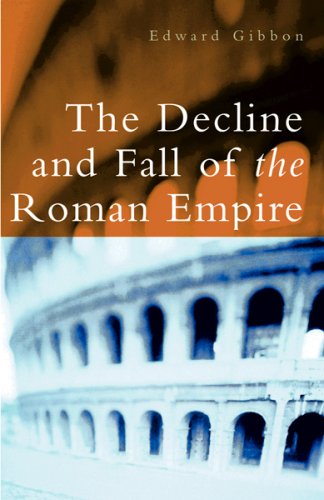
1st Volume of Gibbon's "Decline & Fall of The Roman Empire" Published


British parliamentarian and soldier, Edward Gibbon's (1737-1794) conceived of his plan for Decline and Fall while "Musing amid the ruins of the Capitol" on a visit to Rome. For the next 10 years he worked away at his great history, which traces the decadence of the late empire from the time of Antonies and the rise of Western Christianity. "The confusion of the times, and the scarcity of the authentic memorials, pose equal difficulties to the historian, who attempts to preserve a clear and unbroken thread of narration," he writes. despite these obstacles, Decline and Fall remains a model of historical exposition, and required reading for students of European history.

2.09.2011

February 9th 1744
Battle at Toulon


The naval battle of Toulon or Battle of Cape Sicie took place on 9 February 1744 in the Mediterranean Sea off the coast of Toulon, France. A combined Franco-Spanish fleet fought off Britain's Mediterranean fleet. The French fleet, officially at peace with Great Britain, only joined the fighting late, when it was clear that the greatly outnumbered Spanish fleet had gained the advantage over its foe. with the French intervention, the British fleet was forced to withdraw.
In Britain the battle was regarded as a national disgrace; the Franco-Spanish fleet successfully ended the British blockade and inflicted considerably more damage to the British then they received, causing the British to withdraw to Minorca in a need of heavy repairs. The retreat of Admiral Mathews' fleet left the Mediterranean Sea temporarily under Spanish control, allowing the opposite navy to deliver troops and supplies to the Spanish army in Italy, decisively swinging the war there in their favor.

2.07.2011

Michail Romanov Becomes Czar of Russia
February 7th 1613


Makhail I Fyodorovich Romanov (12 July 1596 - 13 July 1645) Was the first Russian Czar of the house of Romanov. Born of Feodor Nikitich Romanov and Xenia. His reign marked the end of the "Time of Troubles"

Makhail was unanimously elected Czar of Russia by a national assembly on 7 February 1613, but the delegates of the council did not discover the young Tsar and his mother at the Ipatiev Monastery near Kostroma until 24 March. Initially, Xenia protested, believing and stating that her son was too young and tender for so difficult an office, and in such a troublesome time. the weeping boyars solemnly declared that if he persisted in his refusal, they would hold him responsible to god for the destruction of Russia. Makhail eventually consented to accept the throne.

2.04.2011

A Start of Something "New"


Today I decided I would start my own blog as one of those "History Today" as well as remembering things though out the ages, from important events to simply remembering a time long past as well as many things in the middle.
as a simple start off to this journey I will start with one event that happened on this day in, 1451, the Sultan Mehmed II inherits the throne of the Ottoman Empire, whom was born March 30th 1432 and died May 3rd, 1481.

At the age of 21, Mehmed conquered Constantinople, bringing an end to the Byzantine Empire. Continuing his conquests in Asia, with the Anatolian Reunification, and in Europe, as far as Belgrade. Besides Turkish, he spoke French, Latin, Greek, Serbian, Persian, Arabic, and Hebrew.
Mehmed is also regarded as a national Hero in Turkey, his name is given to the famous Fatih Sultan Mehmet Bridge.